
Blog
Best Batch Coding Machine for Food Packaging Businesses

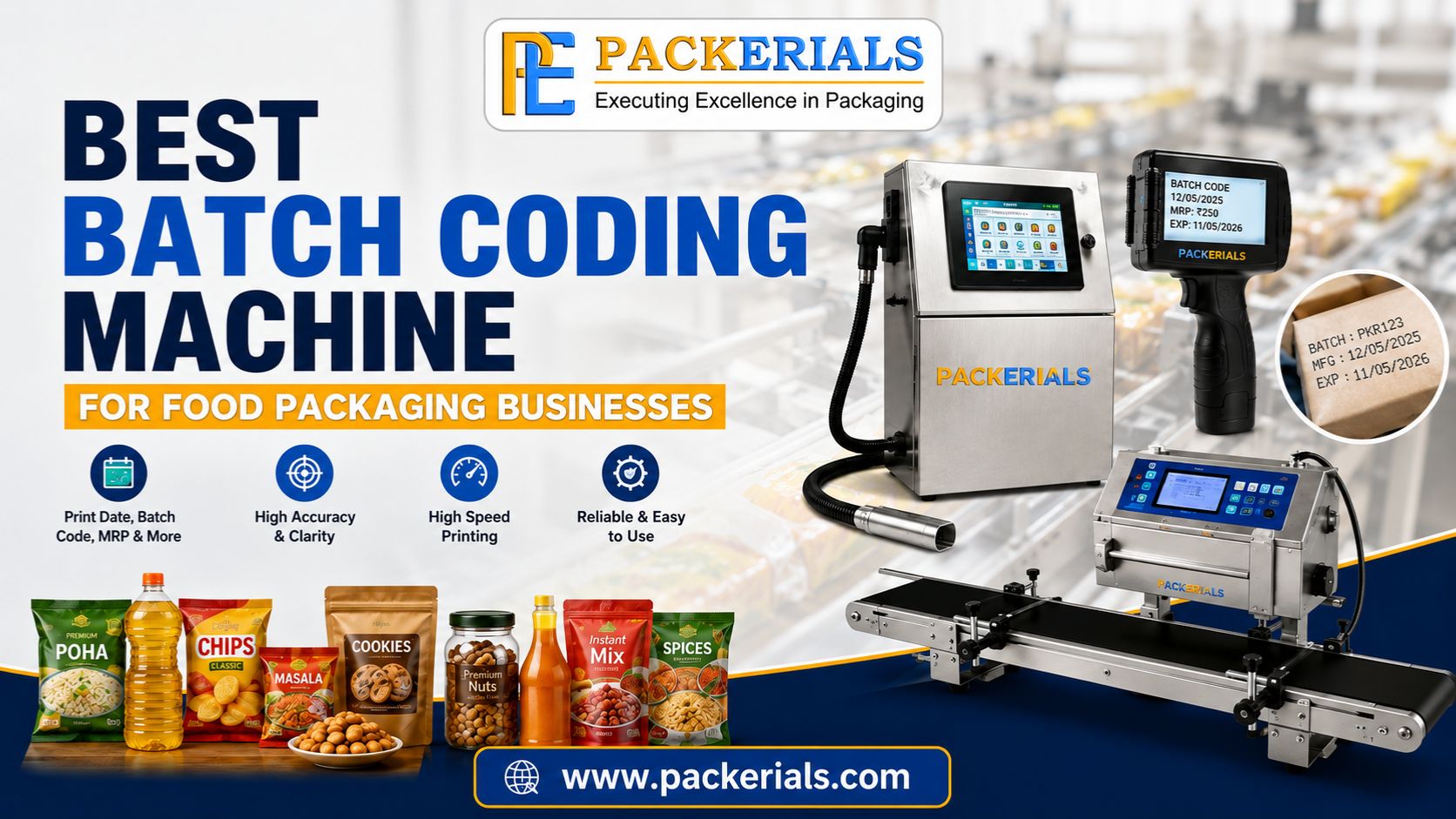
A food packaging line can look simple from the outside. Products are filled, sealed, packed and moved toward dispatch. But somewhere in that process, every pack may need to carry information that identifies when and where it was produced.
A batch number, manufacturing or packing date, expiry or use-by information and other product details have to remain clear enough to be read throughout distribution. In India, FSSAI’s labelling requirements include batch/code/lot identification and date marking for applicable packaged foods.
The challenge for a food business is that the package itself can vary dramatically. A biscuit carton, a laminated snack pouch, a PET bottle and a metal can do not present the same printing surface.
That is why the best batch coding machine for food packaging is not determined by the machine name alone. It depends on what you are printing, where you are printing it and how the packaging line operates.
Start With the Package, Not the Printer
The first question should not be, “Which coding machine should I buy?”
It should be:
“What exactly am I printing on?”
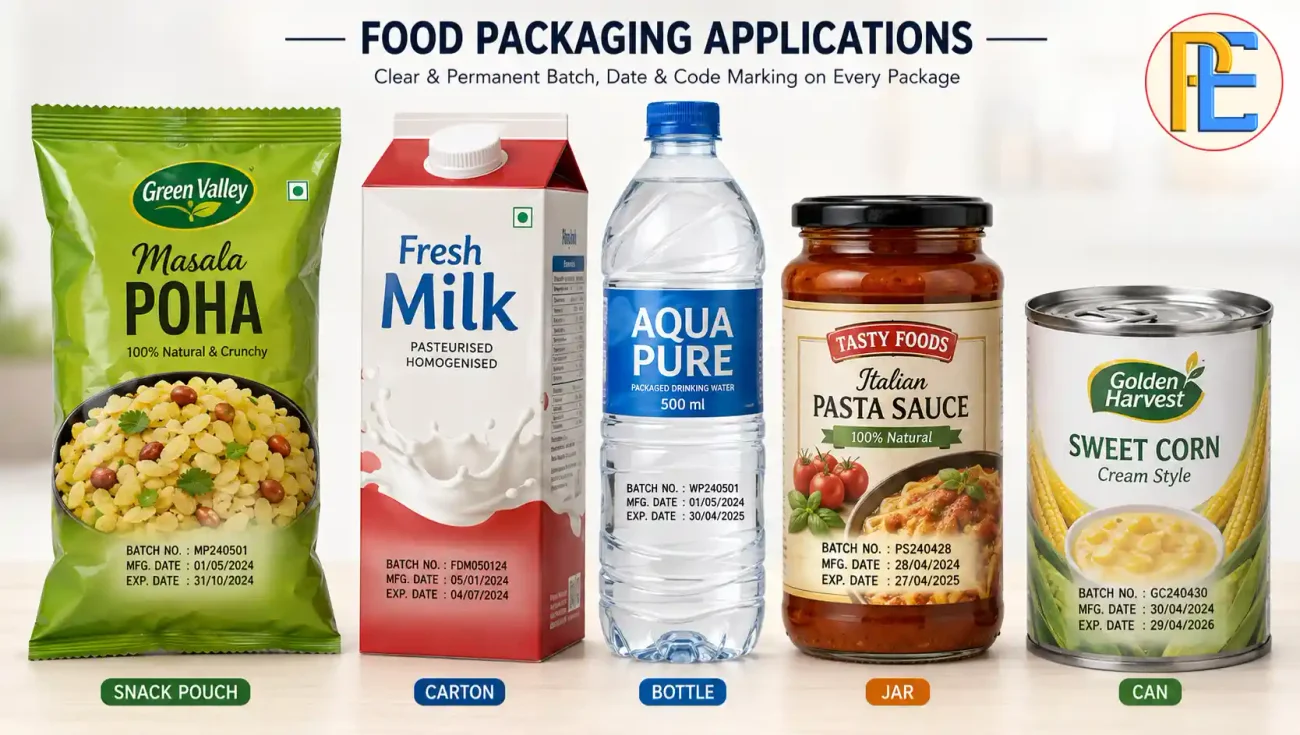
A food manufacturer may use several packaging formats, including:
- Flexible pouches
- Laminated films
- Cartons
- Plastic containers
- PET bottles
- Glass bottles and jars
- Metal cans
- Labels
- Corrugated outer cases
Each surface has different characteristics. Coatings, gloss, curvature, porosity, condensation and the available print area can all affect the final result. Industry guidance similarly recommends selecting coding technology based on packaging material, print area, code content, line speed and production environment.
Which Coding Technology Is Best for Food Packaging?
There is no universal winner. Different technologies have different strengths.
| Technology | Common Food Packaging Applications | Key Strength |
|---|---|---|
| Thermal Inkjet (TIJ) | Cartons, labels and suitable packaging surfaces | High-resolution printing |
| Continuous Inkjet (CIJ) | Bottles, jars, cans and other moving products | Flexible non-contact coding |
| Thermal Transfer Overprinting (TTO) | Flexible films, pouches and flow-wrap packaging | High-quality coding on flexible film |
| Laser | Selected glass, metal and other suitable substrates | Permanent marking |
For example, TTO is commonly used with flexible films and pouches, while CIJ is used across food and beverage applications on a wide range of surfaces. TIJ is often selected when high-resolution coding is required on suitable packaging surfaces.
The important point is that the package determines the technology.
Flexible Pouches and Snack Packaging
Flexible packaging creates a different coding requirement from a rigid carton.
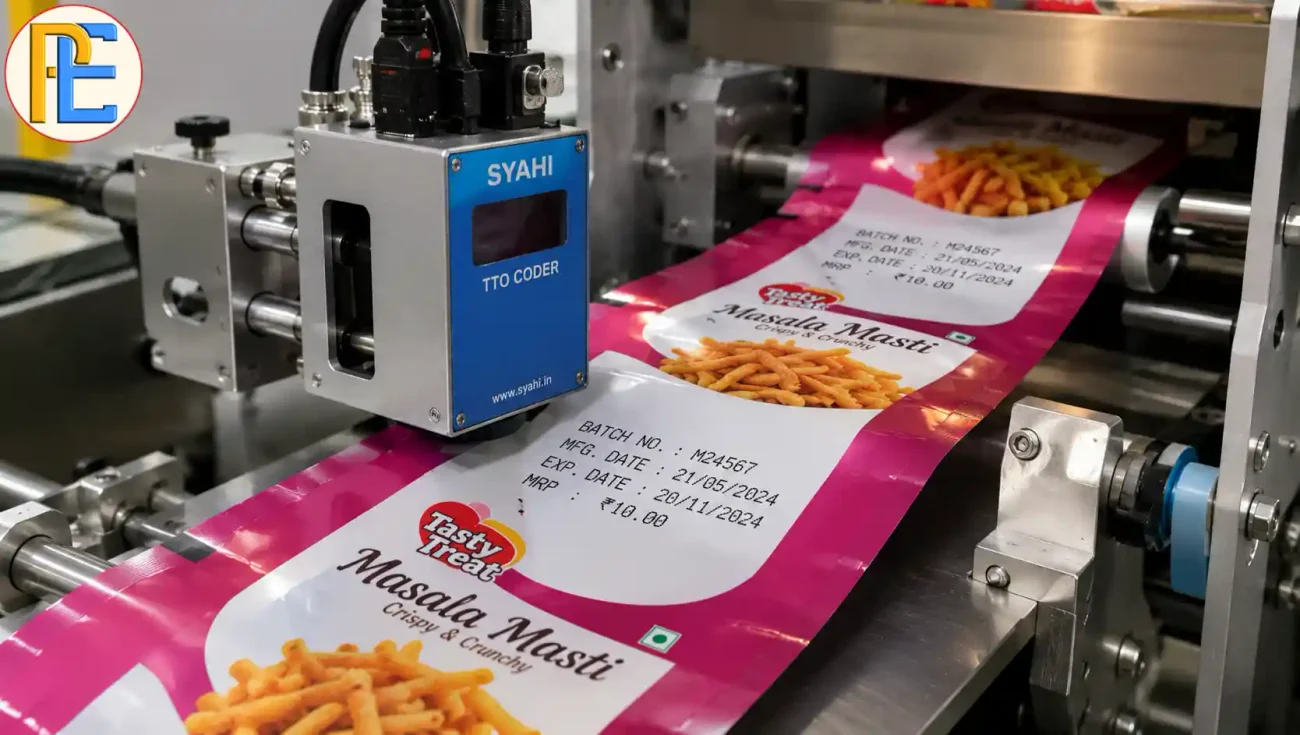
Snack packets, laminated pouches, flow-wrap packaging and similar formats often have limited areas available for coding. The coding system also needs to work with the packaging machine and the movement of the film.
For these applications, TTO can be particularly suitable because it is designed for printing variable information directly onto flexible packaging films. It can produce text, barcodes and other variable information in the designated print area.
The position of the code is important as well. It should not end up across a seal, fold or another area where readability or packaging integrity could be affected.
Cartons and Paper-Based Packaging
Cartons provide a different printing surface.
For many food products, the outer carton needs a clear batch number, date, or other variable information. When the required code contains small characters, barcodes or detailed information, high-resolution printing can become important.
TIJ can be a strong option for suitable cartons, labels, and paper-based packaging, particularly where sharp variable-data printing is required.
However, the coating of the carton matters. A glossy or specially treated surface can behave differently from an uncoated paperboard surface.
This is why a sample test using the actual carton is more useful than choosing a printer based only on a brochure.
Bottles, Jars and Rigid Containers
Food businesses working with sauces, beverages, oils, dairy products, or other liquid and semi-liquid foods often use bottles, jars or rigid containers.
These products can introduce challenges that do not exist with flat cartons.
The printing surface may be:
- Curved
- Glossy
- Non-porous
- Difficult to position
- Subject to condensation or moisture
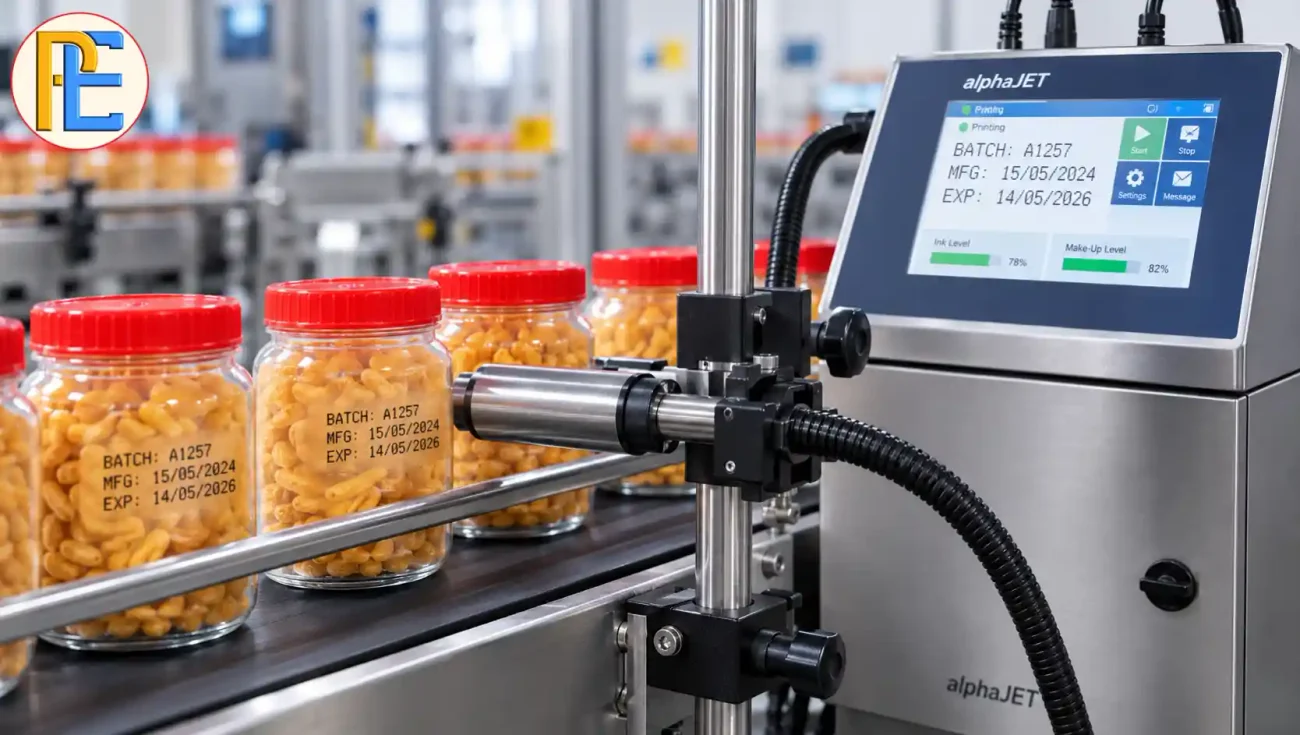
CIJ is commonly used for coding on bottles, cans, plastics and other non-porous surfaces because it can print without physically contacting the product.
The correct ink and application setup still need to be tested for the particular container and operating conditions.
What Information Should a Food Business Print?
The code itself needs to be planned before selecting the machine.
Depending on the product and applicable requirements, food packaging may need information such as:
- Batch or lot number
- Manufacturing or packaging date
- Expiry or use-by information
- Best-before information
- Product identification
- Shift or production-line information
- Barcode or QR code where required
FSSAI’s labelling framework specifies batch/code/lot identification and date-marking requirements for applicable packaged foods. It also specifies how manufacturing/packaging and expiry/use-by/best-before information is to be presented.
This means the coding machine should be selected after defining the code, rather than choosing a machine first and trying to fit the required information into it.
The Real Test: Can It Keep Up With Your Packaging Line?
Food packaging machines can operate continuously and at high production rates.
But there is an important distinction between the speed of the packaging machine and the printing requirement.
A packaging machine may be described in packs per minute, while a printer may specify speed in metres per minute.
They are not the same measurement.
The actual printing requirement depends on factors such as product spacing, code length and the movement of the packaging material.
For high-speed applications, synchronization between the coding system and the packaging equipment becomes important. The printer must place the code consistently rather than simply producing a high-speed print sample.
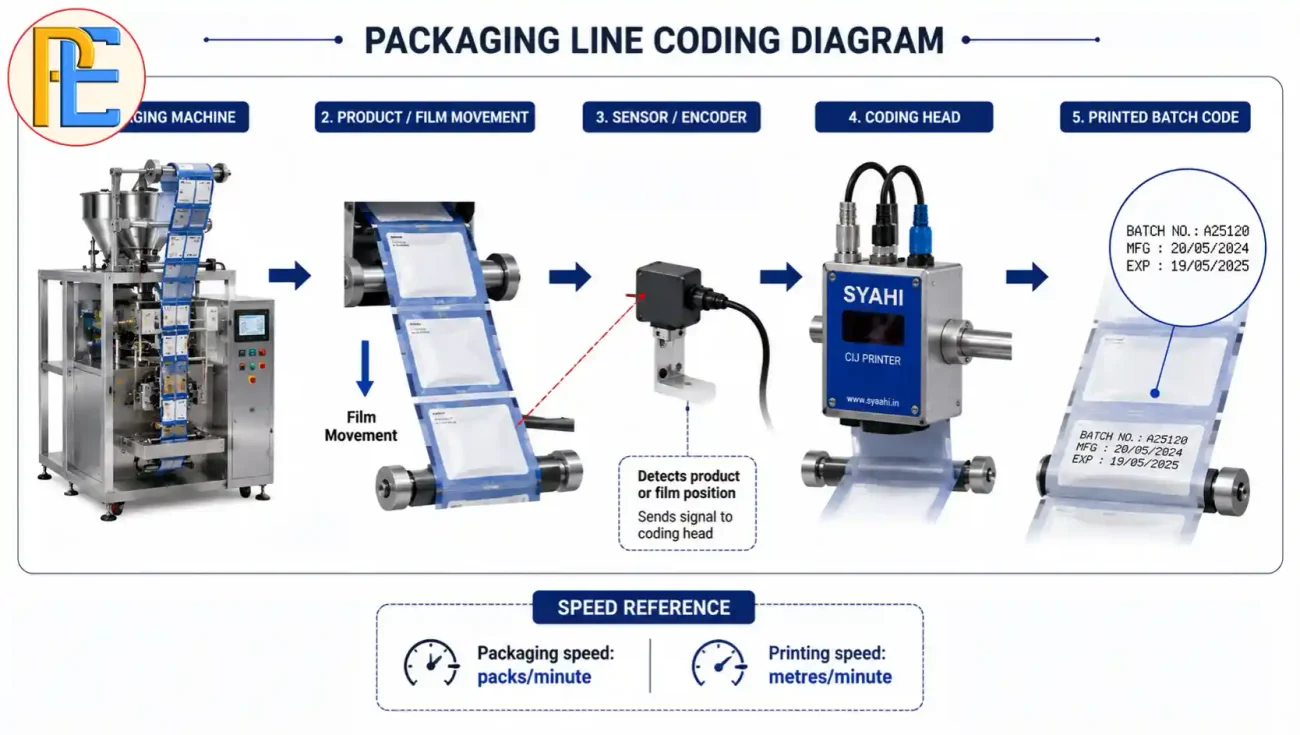
Create a simple technical illustration:
Packaging Machine → Product/Film Movement → Sensor/Encoder → Coding Head → Printed Batch Code
Include a small note:
Packaging speed: packs/minute
Printing speed: metres/minute
Don’t Ignore the Production Environment
A food packaging area can be very different from a clean office or showroom where a printer is demonstrated.
The coding equipment may encounter:
- Packaging dust
- Moisture
- Condensation
- Temperature changes
- Frequent cleaning
- Long operating hours
- Multiple production shifts
The printer’s physical installation therefore matters.
The printhead should be positioned correctly, the code should remain accessible for inspection and the machine should be suitable for the environment in which it will operate.
Most importantly, ink selection should be treated as part of the application rather than an afterthought. The correct ink depends on the packaging surface, required adhesion, drying characteristics and intended application.
What Does a Food Packaging Business Really Pay For?
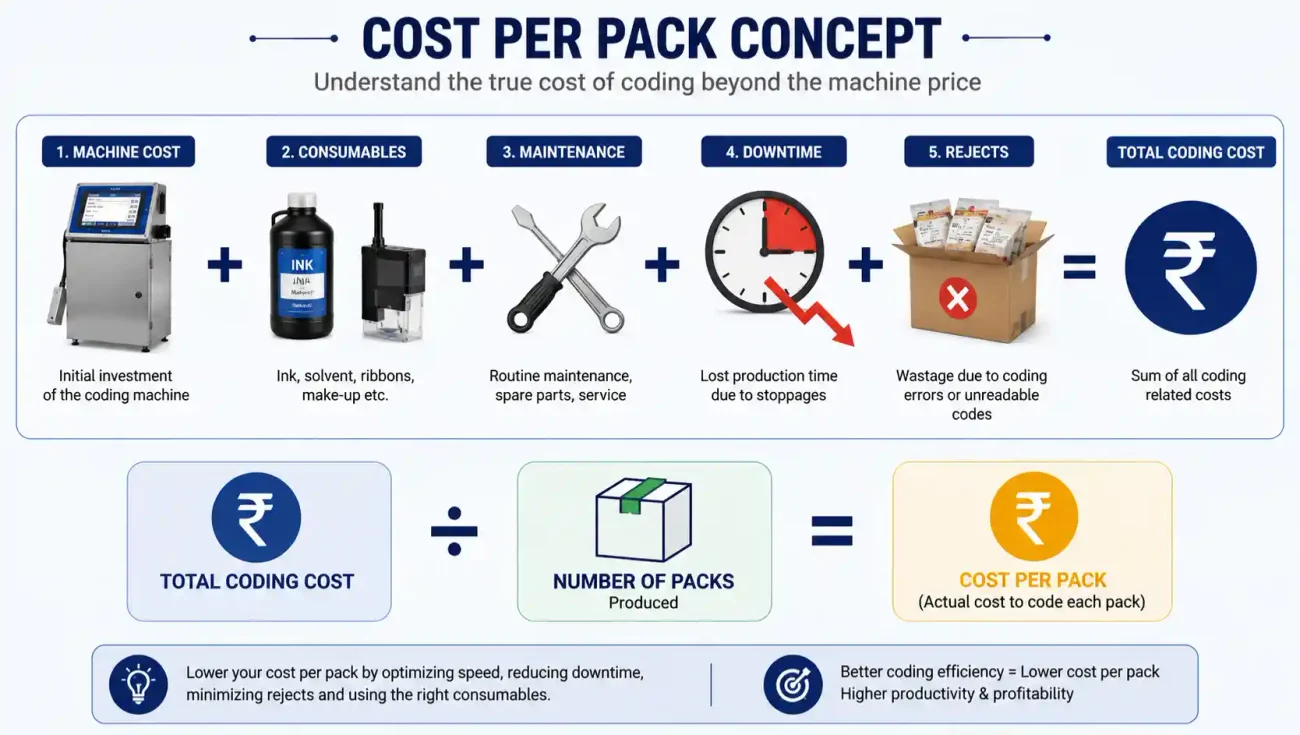
The purchase price of the machine is only one part of the cost.
A better calculation considers the cost of coding each pack over the machine’s working life.
Consider:
- Machine investment
- Ink or ribbon consumption
- Cartridge replacement
- Makeup fluid where applicable
- Routine maintenance
- Spare parts
- Operator time
- Downtime
- Rejected packaging
For a small food manufacturer, a simple system with low operator involvement may be more attractive.
For a high-volume producer, even a small difference in consumable cost or downtime can become significant because the machine may operate for thousands or millions of packs.
How Should a Food Business Choose?
Instead of asking which technology is generally the best, narrow the decision down to the actual packaging application.
For flexible pouches and films:
Look closely at TTO and other technologies suited to the specific film and packaging machine.
For cartons and suitable paper-based packaging:
TIJ can be attractive when high-resolution variable coding is important.
For bottles, jars and rigid containers:
CIJ can provide the flexibility required for many non-porous and curved surfaces.
For permanent marking requirements:
Laser may be worth evaluating where the material and application are appropriate.
These are starting points, not universal rules. Packaging tests should determine the final choice.
Test the Actual Pack Before You Buy
A supplier demonstration is much more valuable when it uses your real production conditions.
Take the actual packaging material and test:
- Required batch/date code
- Actual print location
- Normal production speed
- Code readability
- Drying and adhesion
- Product spacing
- Start and stop performance
- Message changes
- Expected consumable usage
Do not judge the machine only by looking at a beautifully printed sample produced under controlled conditions.
The question is whether the same result can be achieved every day on your production line.
Also Read: https://packerials.com/4-inch-screen-online-thermal-inkjet-printer/
Final Verdict: What Is the Best Batch Coding Machine for Food Packaging?
There is no single batch coding machine that is best for every food packaging business.
A snack manufacturer using laminated pouches may have very different requirements from a dairy company filling plastic containers or a food manufacturer packing products into cartons.
The right decision starts with four things:
Packaging material → Code requirements → Production conditions → Total operating cost
From there, the appropriate technology becomes much easier to identify.
The best batch coding machine is ultimately the one that produces a clear, durable and consistent code on the actual food package while fitting naturally into the existing production process.
For a food business, that is a much more useful definition of “best” than simply choosing the machine with the highest advertised speed or the lowest purchase price.
Frequently Asked Questions
What is the best batch coding machine for food packaging businesses?
The best batch coding machine depends on production speed, packaging material, printing requirements, and budget. Handheld inkjet printers are suitable for small businesses, while online inkjet and continuous inkjet printers are ideal for high-volume food packaging.
Why is batch coding important for food packaging?
Batch coding helps food businesses print essential information such as batch numbers, manufacturing dates, expiry dates, MRP, barcodes, and product codes on packaging. It also supports product traceability and compliance.
Which coding machine is suitable for small food packaging businesses?
A portable handheld inkjet coding machine is often a practical choice for small businesses because it is easy to operate, flexible, and suitable for low-to-medium production volumes.
Can batch coding machines print expiry dates and MRP?
Yes. Many modern batch coding machines can print manufacturing dates, expiry dates, MRP, batch numbers, lot numbers, barcodes, QR codes, and other variable information.
Which batch coding machine is best for high-speed food packaging lines?
For high-speed production, continuous inkjet (CIJ) printers or online thermal inkjet printers are commonly used. The right option depends on the required print speed, substrate, print resolution, and production environment.
Can food packaging coding machines print on different packaging materials?
Yes. Depending on the printer and ink used, coding machines can print on materials such as plastic, laminated pouches, cartons, bottles, films, foils, labels, and other packaging surfaces.
How much does a batch coding machine for food packaging cost?
The price varies according to the machine type, printing technology, print capabilities, and automation level. Handheld models are generally more affordable, while industrial online and CIJ systems can cost significantly more.
What information can be printed using a food packaging batch coder?
A batch coding machine can typically print batch/lot numbers, MFG dates, expiry dates, MRP, product names, barcodes, QR codes, serial numbers, and other variable product information.
How do I choose the right batch coding machine for my food packaging business?
Consider your production volume, packaging material, required print information, printing speed, print quality, ink requirements, automation, and budget. Choosing a machine based on these factors ensures reliable and efficient coding.
Where can I buy the best batch coding machine for food packaging businesses?
You can explore a range of batch coding machines, handheld inkjet printers, thermal inkjet printers, and industrial coding solutions from Packerials. Choose a model based on your packaging requirements and production needs.