
Blog
What Is the Ideal Temperature for a Band Sealing Machine?


Imagine you are running a packaging unit where hundreds of pouches need to be sealed every hour. Your continuous band sealing machine is running, the conveyor is moving, and everything seems normal. But after some time, you notice that some pouches are not sealing properly. A few have weak sealing edges, while others look burnt or wrinkled.
You check the machine, adjust the pouch position and inspect the sealing belts, but the problem continues. One important thing you may need to check is the band sealing machine temperature.
Temperature plays an important role in the performance of a continuous band sealing machine. Even a small adjustment can make a difference in the final sealing quality. However, the correct temperature is not the same for every packaging material. PP, LDPE and laminated pouches have different sealing requirements.
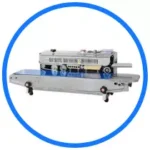
At Packerials, we have more than 20 years of practical experience in packaging machinery. Through our experience with different packaging materials and machines, we have identified useful temperature settings for FRB-770 and FR-900 band sealing machines. Let’s understand how to choose the right temperature and avoid common band sealing problems.
Why Is the Correct Temperature Important for a Band Sealing Machine?
When a pouch passes through a continuous band sealing machine, its open edge moves through the heating and sealing sections. Heat helps bond the inner layers of the packaging material, creating a closed seal.
If the temperature is too low, the pouch may not seal properly. You might notice that the edges open easily or the seal lacks strength. On the other hand, excessive temperature can damage the pouch. The material may shrink, melt or develop burnt sealing edges.
This is why choosing the correct temperature is important. It helps maintain sealing quality while allowing the machine to operate at the required production speed.
What Temperature Should You Use for PP and LDPE Pouches?
PP and LDPE pouches are commonly used in food, spices, grains and other product packaging. However, the temperature required for sealing can vary depending on the pouch thickness and material construction. Based on our practical experience, here are the recommended starting temperatures for PP and LDPE pouches.
FRB-770 Band Sealing Machine Temperature
- Medium speed: 130–140°C
- High speed: 165–170°C
FR-900 Band Sealing Machine Temperature
- Medium speed: 155–160°C
- High speed: 165–180°C
These settings provide a practical starting point for operators. Always check the actual sealing quality with your pouch material before beginning bulk production.
What About Laminated Pouch Sealing Temperature?
Now consider a business packaging products in laminated pouches. These pouches have multiple layers, and their sealing requirements can differ from ordinary PP and LDPE pouches. If you use the same temperature settings for every packaging material, you may not get the expected results.
Based on Packerials’ experience, the following starting settings can be used.
FRB-770 for Laminated Pouches
- Medium speed: 200–220°C
- High speed: 260–275°C
FR-900 for Laminated Pouches
- Medium speed: 210–230°C
- High speed: 260–280°C
The actual temperature depends on the laminate structure, inner sealing layer, pouch thickness and operating conditions.
Why Does Temperature Change with Machine Speed?
This is something many new machine operators want to understand. Think about what happens when a pouch moves through the heating section. At medium speed, it gets more time to receive heat. At high speed, it passes through the heating section more quickly.
As a result, the machine may need a higher temperature to achieve the required sealing quality. This is why temperature and conveyor speed should always be adjusted together.
However, increasing the temperature is not always the solution. The correct setting depends on the packaging material and the machine’s actual performance.
FRB-770 vs. FR-900: Which Temperature Should You Follow?
Although both machines are continuous band sealers, their recommended temperature settings are different. Here is a quick comparison based on Packerials’ practical experience.
| Material | Speed | FRB-770 | FR-900 |
| PP / LDPE | Medium | 130–140°C | 155–160°C |
| PP / LDPE | High | 165–170°C | 165–180°C |
| Laminated | Medium | 200–220°C | 210–230°C |
| Laminated | High | 260–275°C | 260–280°C |
Do not assume that a setting suitable for one machine will automatically produce the same results on another. Always follow the machine-specific starting settings and check the finished seal.
Common Band Sealing Machine Problems You Should Not Ignore
Sometimes, operators blame the machine when the actual problem is an incorrect temperature setting or operating condition. Here are a few common problems:
Weak or Open Seals: If the pouch edges are opening easily, the temperature may be too low or the heating time may be insufficient.
Burnt Pouches: When the pouch material becomes damaged or melted, the temperature or heat exposure may be excessive.
Wrinkled Sealing Edges: Uneven heating, incorrect pouch positioning or inconsistent movement can affect the sealing finish.
Inconsistent Sealing: If some pouches seal properly while others do not, check temperature stability, conveyor speed and sealing belt condition.
How to Get Better Results from a Band Sealing Machine
Getting consistent results does not always require complicated adjustments. A few simple practices can make a difference.
- Start with the recommended temperature for your pouch material.
- Maintain a consistent conveyor speed.
- Inspect the sealing belts regularly.
- Keep the heating components clean.
- Check the temperature controller.
- Test a few pouches before starting bulk production.
Most importantly, do not depend only on the temperature displayed on the controller. Check the actual sealing strength and appearance of the finished pouch.
Read this blog to learn more common band sealing machine problems and how to solve them.
Conclusion
Getting the right temperature for a band sealing machine is not just about setting a number on the machine controller. It is about understanding your packaging material, conveyor speed and machine performance.
A temperature that works well for a PP pouch may not work for a laminated pouch. Similarly, FRB-770 and FR-900 may require different settings for the same material.
At Packerials, our 20 years of practical experience with packaging machinery have helped us understand these differences. The temperature ranges shared in this guide are useful starting points for operators, but every pouch should be tested before regular production.
If you are looking for a continuous band sealing machine for your packaging business, explore the FRB-770 and FR-900 Band Sealing Machines from Packerials, along with our spare parts, installation and after-sales support.
Important note: All temperature ranges in this article are experience-based recommendations, not universal specifications. Actual settings depend on the pouch manufacturer’s sealing recommendations, material construction, thickness, machine condition and production speed.
Frequently Asked Questions
1. What is the ideal temperature for a band sealing machine?
The ideal temperature depends on the pouch material and machine speed. For example, the FRB-770 uses 130–140°C for PP and LDPE at medium speed, based on Packerials’ practical experience.
2. What temperature is suitable for LDPE pouches?
For FRB-770 and FR-900, the recommended starting ranges are the same as the PP settings listed in this guide.
3. What is the ideal temperature for laminated pouch sealing?
For FRB-770, use 200–220°C at medium speed and 260–275°C at high speed. For FR-900, use 210–230°C and 260–280°C, respectively.
4. Why do pouches burn during band sealing?
Excessive temperature or prolonged heat exposure can damage pouch material. Check the temperature and conveyor speed.
5. Can the same temperature be used for FRB-770 and FR-900?
No. Their recommended temperature settings can differ, even when sealing the same packaging material.
Related Posts
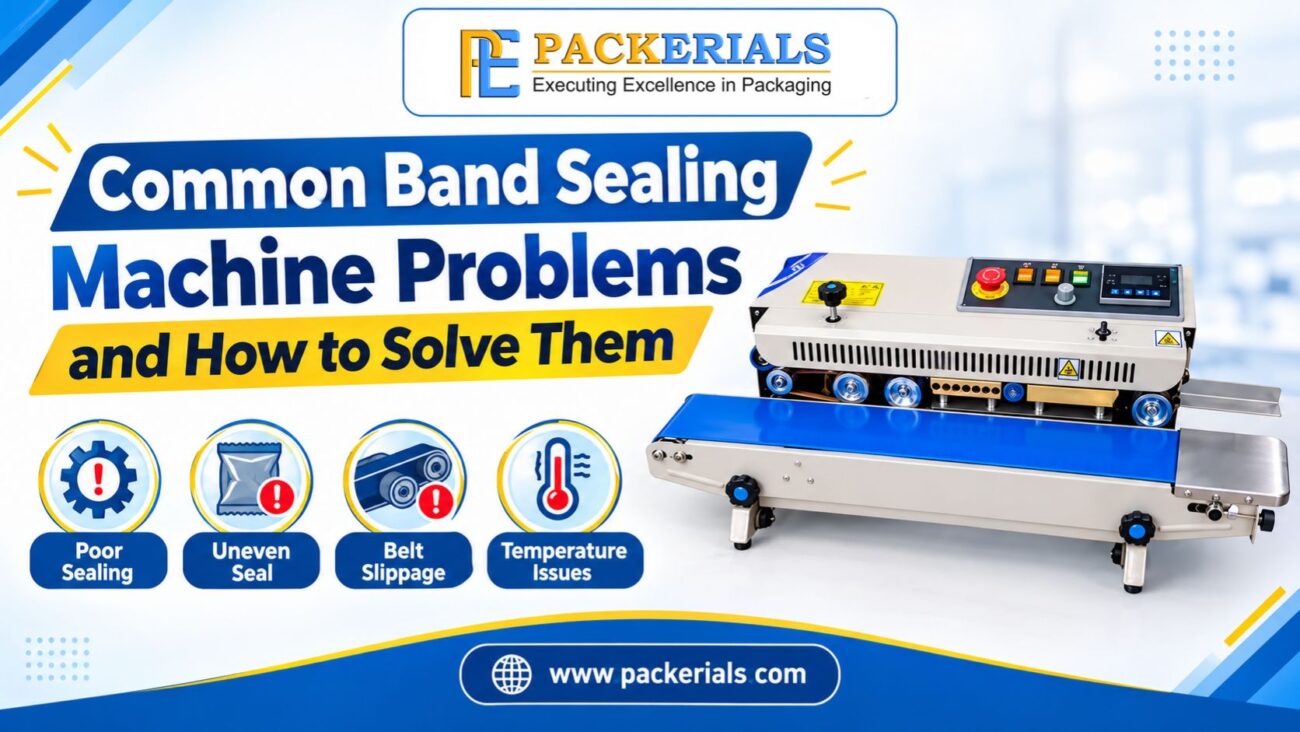
Common Band Sealing Machine Problems and How to Solve Them
-
Posted by
 Aniket